This is Mine
Ten-year-old Firhan* sits quietly in the corner of the art therapy room, his eyes scanning the space. He doesn’t speak much at first, and when he does, it’s barely more than a whisper. While the other children in his group session dive into paint and clay, Firhan hovers about silently.
Referred to our programme with a history of developmental trauma, Firhan came to our centre carrying more than a child should ever have to hold. His posture was guarded, his movements careful, his emotions folded inward like secrets too heavy to share.
But art has a way of speaking when words are hard to find.
In those early sessions, he rarely described his work. When asked about his paintings, he’d shrug: “I don’t know.” But in time, a shift happened. One session, he shaped a delicate clay flower and said it was “a boy who has suffered a lot but met people that cared about him.”
It was a quiet breakthrough, but a powerful one.
GROWTH AND DISCOVERY
For children like Firhan, these sessions are more than an outlet. They are a mirror and a doorway: reflecting who they are and offering a way forward. Art therapy helps them process trauma, reconnect with themselves, and most importantly, feel safe enough to just be kids again.
Week by week, Firhan softened. His “I don’t know” turned into hesitant descriptions. He began to experiment with colour, texture, even joy. In one session, he created two wands—one he kept private, and one he shared. A metaphor for the parts of himself he was learning to accept, one piece at a time.
Here, he wasn’t just another quiet boy. Through art, Firhan learned that his voice mattered—not in loud and grand declarations, but in the quiet confidence of a clay flower, or the courage to say of his art: This is mine.

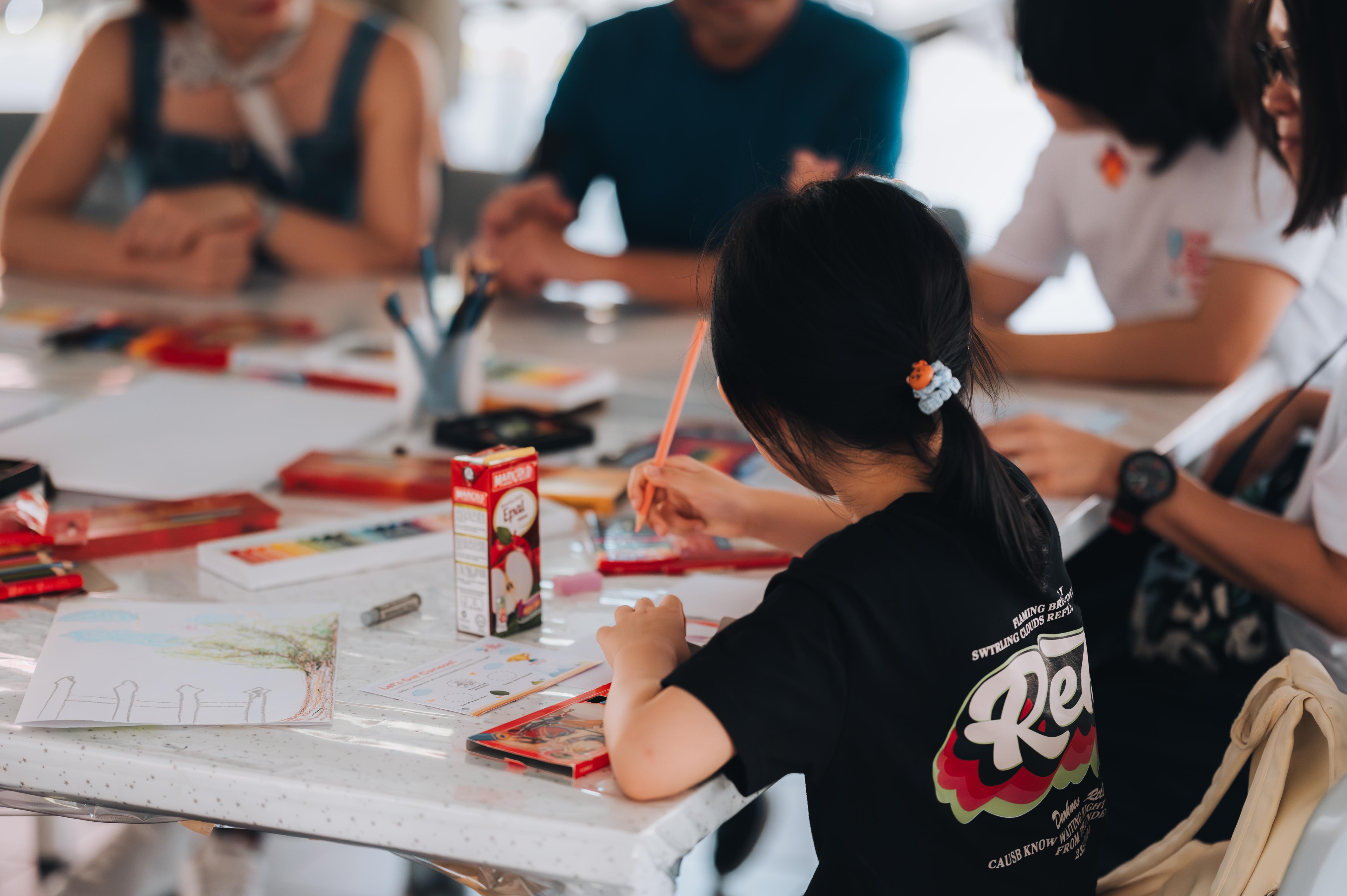
The Singapore Mental Health Study estimates that close to 2 in 3 Singaporeans have experienced at least one adverse childhood experience before the age of 18. PHOTO CREDIT: CHRIS J. DAVIS
MAKING A DIFFERENCE
The Singapore Mental Health Study estimates that close to 2 in 3 Singaporeans have experienced at least one adverse childhood experience before the age of 18.
When left unaddressed, these may lead to developmental trauma developing in the child, resulting in possible mental health issues and developmental delays which follow the child to adulthood.
Interventional work such as creative arts therapies is often crucial in addressing these issues and helping the child to process their individual traumas. Through the creative process, children are able to gradually build resilience and a stronger sense of self and explore difficult experiences in a safe space.
And it’s thanks to people like you that this space exists. Every child who passes through our doors and leaves transformed can do so because of a community standing behind them, making sure that time and care are available when needed the most.
So from all of us who get to witness these transformations: thank you.
You’ve made a difference. And that difference echoes far beyond the therapy room.
Read Firhan’s full story in our 2024 Annual Report.
About The Client
Firhan is one of three boys aged between 10 and 11 years old living in a residential home setting who were going through group art therapy together. The boys were referred by clinical psychologists and staff at the residential home. They share a background of harsh physical punishment at home and arguably have developmental trauma.